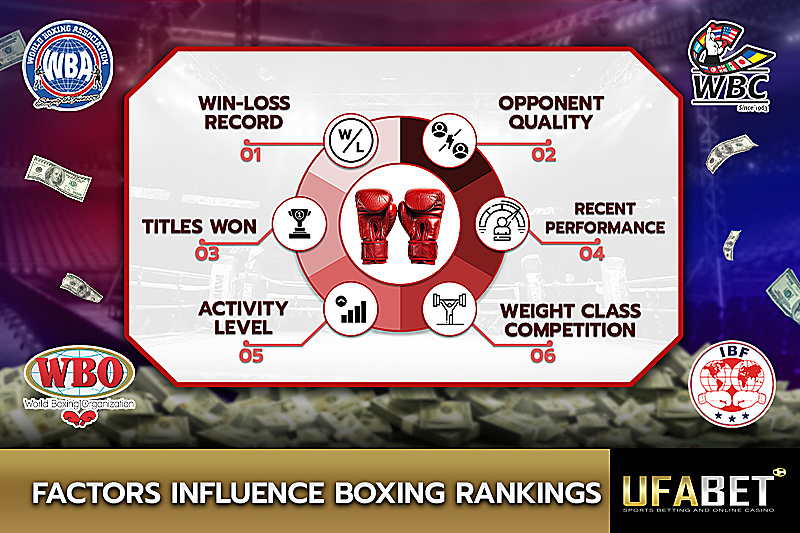
The Boxing Rankings are the official rankings maintained by professional boxing's four major sanctioning bodies, namely, the WBA (World Boxing Association), the WBC (World Boxing Council), the WBO (World Boxing Organization), and the IBF. The boxing rankings identify the top fighters in each weight division based on their performance, records, and accomplishments. They are continuously updated and determine which boxers are eligible to compete for championship titles sanctioned by each organization, which is critical to planning title fights and ensuring fairness in the sport.
The WBA rankings feature the top boxers in each weight class based on recent performance and titles held, while the WBC rankings rate boxers based on their achievements, fight quality, and activity in their respective divisions. The WBO rankings analyze and position fighters based on their wins, competition level, and potential for title contention. The IBF rankings showcase top competitors in each weight class based on specific criteria such as victories and adherence to the federation's regulations.
Boxing is a combat sport where two participants fight with their fists, usually while wearing cushioned gloves, in a regulated ring and under stringent rules. Matches are separated into timed rounds, and fighters compete to outscore or knock out their opponents. Victory is obtained through judge-awarded points, a technical knockout (TKO), or a knockout (KO). Amateur boxing is found in Olympic and youth sports, focusing on points rather than knockouts. Professional boxing is a profit-driven sport that emphasizes entertainment and features lengthier rounds. Boxing, which demands talent, physical fitness, mental toughness, and strategy, is popular worldwide.
The main purpose of the boxing rankings is to build a fighter hierarchy. Rankings highlight the best-performing fighters in specific weight classes. It provides an organized assessment of where boxers are in their career. Rankings determine which boxers qualify to compete for championship belts in their divisions. Fighters ranked #1 are frequently the required challengers for a title. Boxing rankings maintain transparency and fairness by rating fighters based on accomplishments rather than bias. Rankings encourage boxers to grow and move up the ladder with victories and quality opponents. Sanctioning bodies employ rankings to promote high-stakes matches that draw international interest, such as unification bouts involving champions from various organizations. Rankings allow fans to follow their favorite fighters and speculate on forthcoming battles and prospective champions.
UFABET is a popular online sports betting site that provides various benefits when betting on boxing. UFABET offers different betting markets for boxing events, including championship fights and undercards, to suit all levels of fans and gamblers. The platform provides live betting, allowing users to place bets as matches play out, increasing excitement and dynamic wagering chances. UFABET provides attractive odds on boxing fights, boosting the potential return for bettors.
UFABET's intuitive platform allows easy navigation, information evaluation, and bets placement. UFABET assures that deposits and withdrawals are secure, creating a safe atmosphere for financial operations. The platform provides tips, research, and rankings to assist gamblers in making informed judgments. UFABET routinely runs appealing promotions, such as deposit bonuses and cashback deals, to improve the betting experience. Betting on boxing with UFABET combines entertainment and potential financial rewards, making it a popular choice among fans. Responsible gambling, however, is necessary.
 Boxing Rankings: WBA, WBC, WBO, and IBF Rankings
Boxing Rankings: WBA, WBC, WBO, and IBF Rankings
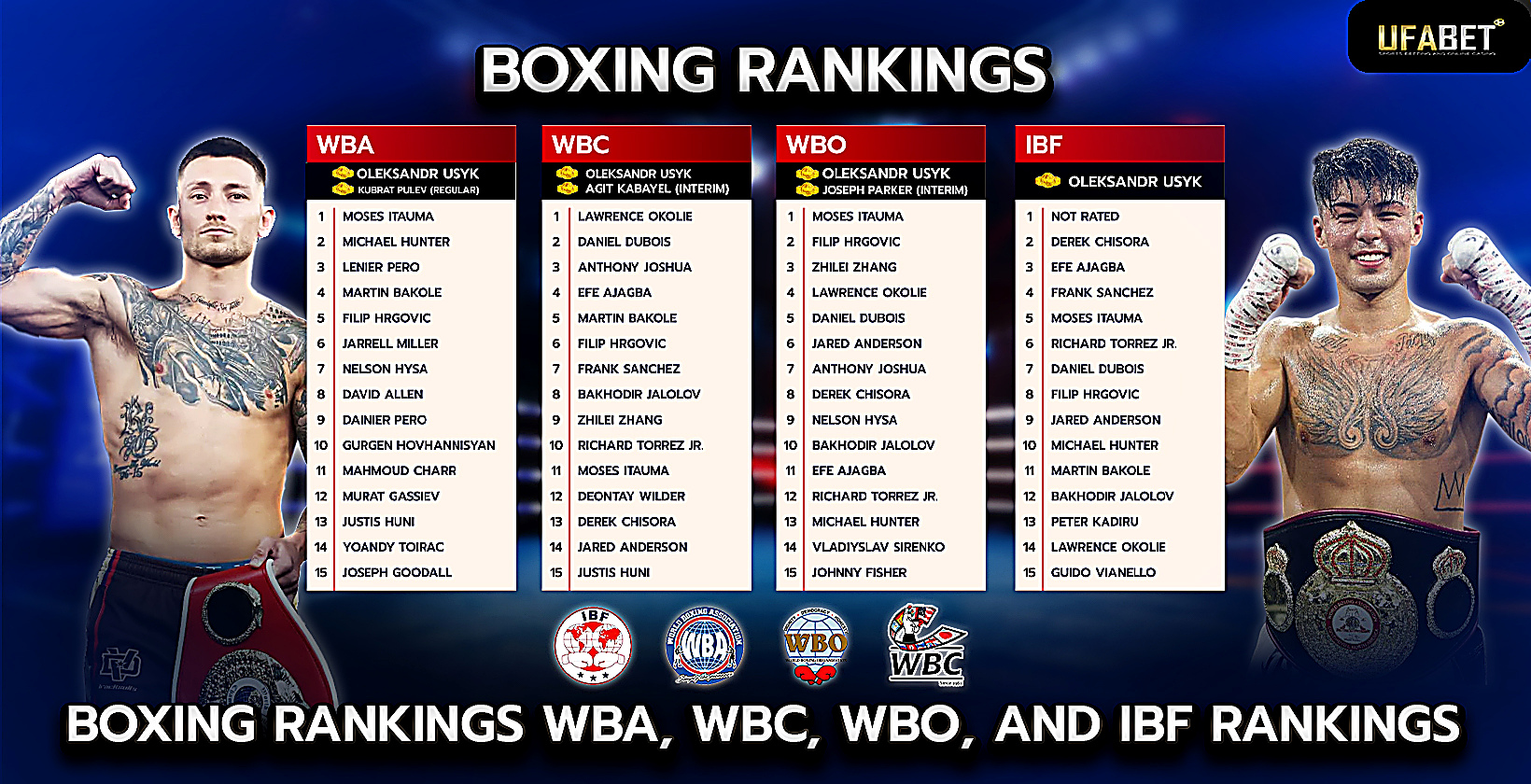
Boxing Rankings
Coming soon
How to Understand the Boxing Rankings?
How Important is the Boxing Rankings for Betting?
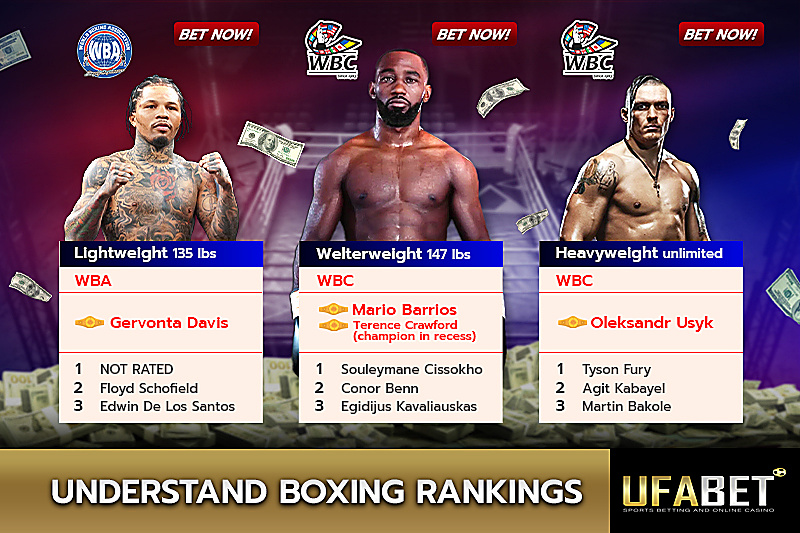
Boxing rankings for betting are important because they provide an impartial assessment of fighter skill levels and recent performances, influencing odds, betting methods, and market dynamics. Rankings impact betting decisions by identifying favorites and underdogs. Betting chances are significantly influenced by rankings, which represent combatants' perceived talents. High-ranked boxers are favorites, while lower-ranked boxers are underdogs. For example, a titleholder ranked first is prone to face shorter boxing odds than an unranked challenger.
Another effect is the ability to predict fight dynamics. Rankings show the difference in skill or experience between combatants. Bettors use the data to determine if an upset or dominant performance is imminent. Another option is to stay informed about market trends. High-profile fights between top-ranked contenders draw heightened betting interest. The matches are perceived as more predictable, eliminating uncertainty in wagering.
Rankings in betting provide strategic boxing betting opportunities, enhanced analysis, risk management, and public perception vs. reality. Rankings help gamblers find value bets, especially when the odds do not match a fighter's ranking. For example, an underdog ranked third has a greater chance against a champion than the betting lines indicate. Bettors examine combatants' history rankings to uncover trends that predict future performance, such as constant progress or decline.
Rankings decrease guesswork by providing a standardized method for assessing fighters' readiness for competition. For example, a bettor avoids betting on unranked or recently ranked boxers versus experienced top-10 opponents. Rankings reveal differences between public hype and real performance. For example, a popular boxer outside the top ten is underestimated by casual fans, opening up advantageous opportunities for informed bettors. Boxing rankings are an invaluable resource for studying match dynamics, developing strategies, and predicting potential upsets, making them essential for informed and profitable Boxing betting.
How are Rankings determined in Boxing?
Rankings are determined in boxing using performance-based evaluations that consider win-loss records, opponent quality, recent activity, and conformity with each sanctioning body's specific requirements. The rankings are critical for determining contenders for title fights and ensuring fair competition.
Rankings evaluate fighters in weight categories based on their accomplishments. Common considerations include the number of victories, particularly against outstanding opponents, and if a fighter has recently competed in the ring. Fighters who defeat higher-ranked opponents or hold regional titles climb up the rankings. A drop is caused by poor performance, inactivity, or failure to comply with weight management guidelines. Sanctioning bodies use criteria representing their interests, while all organizations share certain features.
Common criteria for all organizations include win-loss records, opponent quality, activity levels, regional titles, and mandatory fights. The Win-Loss Record suggests that, particularly in high-profile fights, boxers with strong records are preferred. Another factor to consider is the caliber of opponents. Beating ranked opponents or former champions improves the challenger's ranking. Regular fight participation keeps boxers higher on the list, while winning sanctioned regional belts raises rankings. Success in eliminating bouts or obligatory challenges is critical.
Unique Criteria by Organization for the World Boxing Association (WBA) include several champions in a class (Super, Regular, Interim), which influences rankings. Prioritizes the winners of the required eliminator. The World Boxing Council (WBC) adopts a points-based system. Fighters' social contributions are assessed, and champions are given leniency in their rankings. WBO (World Boxing Organization) ranks its regional champions and prioritizes young prospects and emerging skills. The International Boxing Federation (IBF) strictly enforces mandatory defenses and weight limits. It excludes fighters with titles from other sanctioning organizations. Boxing rankings are essential to the sport's structure, providing a clear path to championship opportunities while reflecting a mix of universal ideas and organization-specific techniques.
What are the Factors that Influence the Boxing Rankings?
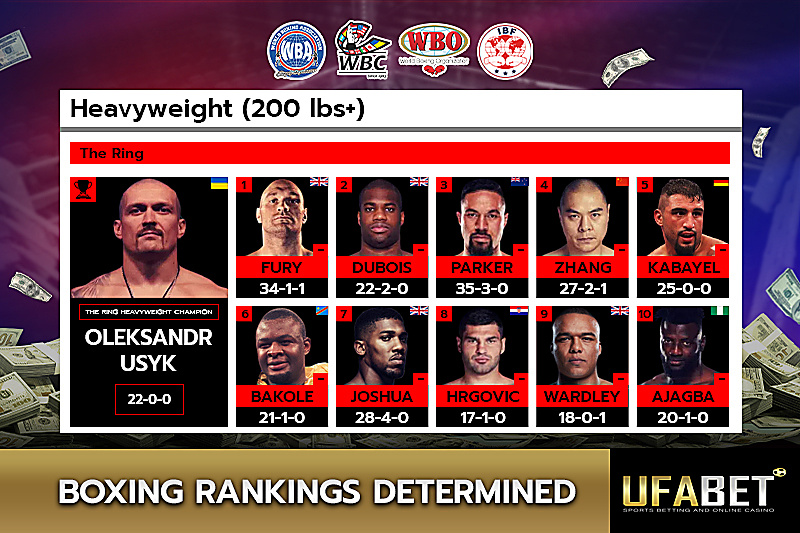
The factors that influence the boxing rankings are listed below.
- Win-loss record: A fighter's win-loss record strongly predicts success in the ring. Fighters with more victories, particularly against top-tier opponents, rank higher. Losses, especially in title bouts or against lower-ranked fighters, have a detrimental impact on rankings.
- Quality of opponents: Beating higher-ranked or well-known opponents improves a fighter's standing. Wins over formidable opponents indicate competence and competitiveness. Victories over lesser-known or unranked opponents are given less weight in rankings.
- Titles and championships: A fighter's ranking rises significantly after winning regional or world titles. Defending a title successfully strengthens their status. Interim or secondary titles contribute but are less valuable than major championships.
- Performance in recent fights: Recent wins or dominant performances, such as knockouts or unanimous decisions, greatly influence the Boxing leaderboard. A fighter's ability to continually outperform their opponents indicates a readiness for tougher competition. Poor performances or narrow victories hinder ranking advancement.
- Activity level: Fighters who stay active and fight regularly are ranked higher than fighters with longer breaks or are inactive. Sanctioning organizations emphasize constancy in participation since it shows a fighter's dedication and current form. Inactivity, even among champions, results in expulsion or rank reduction.
- Weight class competition: A fighter's rank is determined by their weight class's talent level and competition. Highly competitive categories with several elite competitors make it more difficult to increase the Boxing rankings. Fighters move more swiftly with fewer memorable victories in less competitive divisions.